
DALLAS COWBOYS CHEERLEADERS Legacy Lag case study
How a $9 billion franchise's compensation model exposed Legacy Lag in how women’s labour is valued.
The Dallas Cowboys Cheerleaders sit at the center of one of the world's most valuable sports franchises. They provide elite performance, media content, and global visibility. Yet their compensation model remained anchored to inherited assumptions about cheerleading as decorative, peripheral support labor.
A 2018 lawsuit, subsequent settlements, and a 2024 Netflix documentary exposed a system that relied on "thank you for the opportunity" resilience to mask structural underpayment, forcing a public reckoning with outdated labor practices. It is a clear example of Legacy Lag: inherited ideas about “grateful” feminine support work continuing to organise pay and conditions long after women’s economic and legal power has shifted.
$9B franchise valuation, one of the most lucrative in sports.
Cheerleaders worked 30-40 hours/week for as little as $150-500 per game; mascots earned $25-53K/season.
The decision DC made
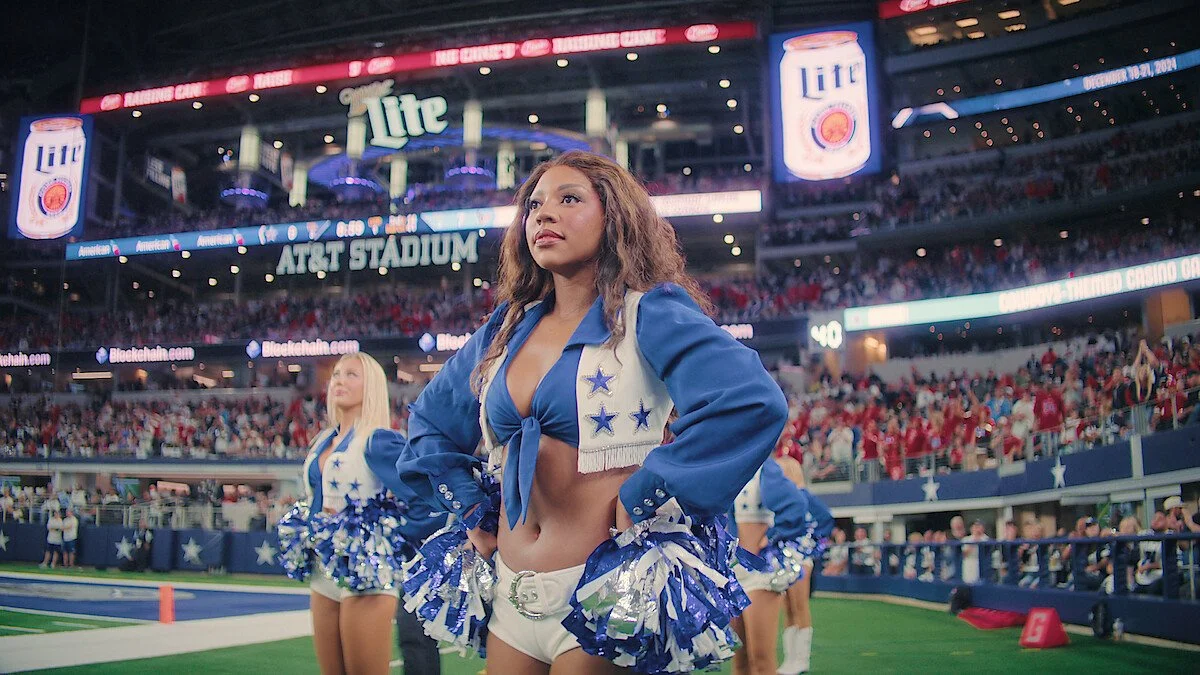
For decades, the Dallas Cowboys maintained a compensation structure that paid cheerleaders significantly below market rates for comparable elite performers. Cheerleaders worked extensive hours; training camps, game days, promotional appearances, late nights and weekends, for compensation that didn't reflect the skill level, visibility, or brand value they generated. The labor model treated them as replaceable support staff rather than core talent driving fan experience and franchise revenue.
400% pay increase implemented only after 2018 lawsuit and 2019 settlement.
2024 Netflix series "America's Sweethearts" exposes working conditions to global audience, including cheerleaders sleeping on dog beds due to grueling schedules.
Where Legacy Lag showed up
The compensation structure rested on inherited assumptions that cheerleading was symbolic, feminine, peripheral labor. Women expected to feel grateful for proximity to a prestigious brand rather than demand fair pay. These assumptions were embedded in the Cowboys' pay scales, contract terms, job classifications, and PR narratives celebrating resilience and positivity over equity—structures built when women had less economic agency and fewer legal protections to contest underpayment.
By the 2010s-2020s, the market had shifted dramatically: women's economic power was rising (influencing 85% of household purchasing decisions, controlling $10+ trillion in US investable assets), legal consciousness was growing, and public discourse around fair pay had intensified. Legacy Lag is the gap between those older assumptions about "grateful" female labor and the contemporary reality of women as economically powerful workers unwilling to accept devaluation as the price of participation.

The cost of the misread
Pre-2018 – Longstanding low-pay model persists, framed as an honor to represent the Cowboys brand.
2018 – Lawsuit filed over underpayment and labor conditions.
2019 – Settlement reached; compensation increases implemented (~400%: training camp $75→$500/week; game day $200→$400).
2024 – Netflix series exposes working conditions to global audience, amplifying scrutiny and reputational risk.
The Dallas Cowboys are a $9 billion franchise that will survive this misstep financially, but the episode revealed a deeper strategic risk in how they value women as workers. There were significant legal costs and settlement payments, brand damage from "America's Team" being reframed as a brand that celebrates women's image while underpaying their labor, talent pipeline risk as elite dancers demand better conditions, and forced reactive correction rather than proactive leadership.
WHAT A DIAGNOSTIC WOULD HAVE REVEALED
A Legacy Lag audit ahead of the crisis could have surfaced the misalignment between the Cowboys' compensation model and market reality, long before lawsuits and public backlash.
Labor market data showing comparable pay for elite performers in entertainment, sports, and media sectors.
Legal risk patterns: increasing cheerleader lawsuits across NFL franchises (Raiders, Jets, Bills, Buccaneers settlements 2014-2018).
Cultural discourse data showing growing public conversation around unpaid female labor, wage gaps, and "grateful" narratives becoming toxic rather than aspirational.
Talent pipeline signals: exit interviews, recruiting challenges, and industry reputation risks.
The cost of a diagnostic would have been marginal compared with the legal costs, reputational damage, and operational disruption caused by being forced to correct under public pressure.
What this shows about Legacy Lag
This case shows how quickly inherited assumptions about labor value can turn into legal and reputational risk once markets move. The Cowboys' compensation structure reflected an older logic in which women should feel grateful for visibility rather than demand fair pay; women's economic and legal power had already shifted, and the gap only became visible through crisis. Legacy Lag diagnostics are designed to surface these gaps upstream—before they show up as lawsuits, settlements, or Netflix documentaries.
Where else this applies
While this example sits in women's labor in sports, the same pattern appears wherever social and economic realities have moved faster than institutional logic; across gender, class, race, generation, and geography.
This isn't just the Cowboys' problem. It's a pattern of Legacy Lag: organisations relying on inherited assumptions about who holds value, long after the market has moved.
Download the full case study
LET’S ChAT
Feel free to contact us via email or fill out our contact form to discuss the details for your upcoming event. We’re excited to work with you and turn your ideas into an exceptional experience!